星降り山荘の殺人 — (New Star Press) Jun Kurachi
A mystery novel that’s neither exceptionally good nor particularly bad in terms of logic. At first, I thought the author’s notes before each chapter were setting up a “challenge to the reader” at the end, but they turned out to be part of a narrative trick. The personality shift at the twist revealing the motive and culprit is baffling—felt like a witness taking the stand in Ace Attorney. The author’s dedication to narrative misdirection and character reversal reads as if he’s telling the reader: “If this breaks the fair-play rule, so be it—I had fun writing it.”
地雷グリコ — (Kadokawa) Yūgo Aosaki
An award-winning title reportedly getting a Chinese release later this year. Unlike Aosaki’s usual school-set mysteries, this is one of his few collections of intellectual duels and mind games. The highlights are undoubtedly the third story (rock-paper-scissors) and the final poker game—both well-written and full of tension. This book is highly adaptable for manga or drama. Highly recommended—looking forward to more.
Doctor Smirno’s Diary — (Angry Unicorn Publishing) Samuel August Duse
Bought the Kindle version after seeing it on Fang’s Blog. A brilliant gem from over a century ago, predating the Golden Age of detective fiction. It’s a masterful fusion of logical deduction, narrative misdirection, and clock-based trickery. Though it remains obscure, fans of Agatha Christie will notice parallels—especially with The Murder of Roger Ackroyd. Notably, this book predates Christie’s novel by 9 years, and uses a similar twist (perhaps inspiring her?). A must-read for any mystery fan.
BERSERK Deluxe Edition Vol.1 — (Dark Horse Manga) Kentaro Miura
Got this English oversized edition mainly because the early Chinese translations were reportedly poor. Vol.1 ends right before the Golden Age arc begins. The large format adds so much visual power—Miura’s compositions and artwork, even before reaching peak form, hit hard. The God Hand’s appearance in the Count arc is particularly stunning. The downside? The set is expensive—collecting all 14 volumes costs around ¥4700. You could opt for the Japanese convenience store editions, but for non-Japanese readers, English or Traditional Chinese editions are more practical.
And Suddenly the Inventor Appeared – (Southwest Jiaotong University Press) Genrich S. Altshuler
A book that feels both outdated and timeless. While many of the techniques are specific to manufacturing innovation, it offers a solid intro to inventive theory, unlike other books in the TRIZ series which focus more on contradiction matrices. I read this as a child and noticed some questions were marked “no answer”—and still are in the latest edition. I’d like to share a few of my thoughts:
(1) Problem 58: “Mutual murder” (? Strange choice of example).
(2) Problem 69: Colored markers on a mercury column or a magnifying thermometer.
(3) Problem 70: Use inclusion matching or reconstruct crystal cross-sections via isotope tracing.
(4) Problem 71: Astronaut’s idea is impractical—water is paramagnetic. Since the original text is vague, I assume it’s about using coffee powder, not whole beans. My solution: pre-pack powder in a pouch, inject hot water, knead the bag to mix, and drink via a straw—surface tension still applies. For actual beans, you’d need a dedicated espresso machine like ESA’s.
偽りの仮面と、絵空事の君 — (Dengeki Bunko) Fukaya Asashiro
A werewolf-style deduction game framed as a demon-summoning ritual. The culprit’s motive and identity are hard to deduce based on daily activity logs alone. The core twist lies subtly in the daily tasks each player performs under their assigned roles.
The Singularity Is Nearer – (China Financial & Economic Publishing House) Ray Kurzweil
A follow-up to The Singularity Is Near by futurist Ray Kurzweil. While the previous book was data-rich and conceptually profound (a nod to The Emperor’s New Mind), this one feels like warmed-over hype. Main claims:
-
AI will pass the Turing test by 2029.
-
Brain-computer interfaces will soon extend human life.
-
The singularity arrives in 2045.
The book is a mashup of information theory and evolutionary determinism, full of vague predictions. Not recommended.
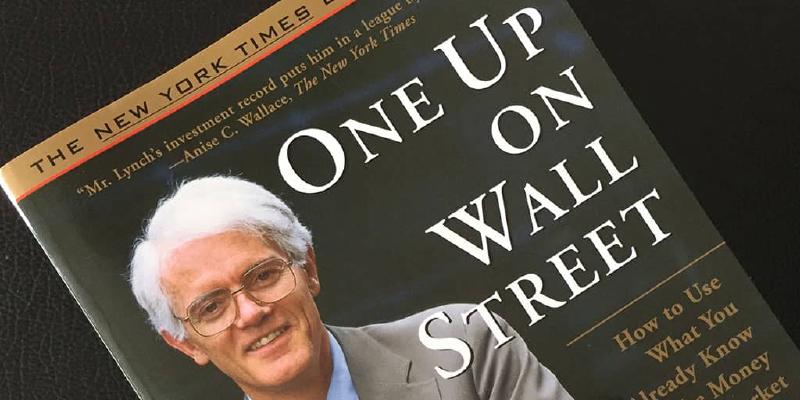
One Up On Wall Street – (Mechanical Industry Press) Peter Lynch/ John Rothchild
“Peter Lynch is a living LEGEND.” That was my first impression after reading. If you’re like me—a finance noob wanting to learn about fundamentals, earnings reports, and value investing, especially in US or HK markets—this is the perfect place to start. Each chapter is filled with real-life examples, making it highly readable. Lynch’s advice: start with the industries you understand, analyze companies from products or financials, and find your own “tenbagger.” Even if you prefer index funds, this book will help you appreciate compounding and regular investment. ★★★★★★★★★★ Must-read.
Humiliated and Insulted – (Yilin Press) Fyodor Dostoevsky
My first “serious literature” book in half a year. The last Dostoevsky I read was The Idiot and White Nights back in high school—forgotten most of it. This time, I chose easier entries: Humiliated and Insulted (trans. Zang Zhonglun) and Notes from Underground (trans. Cao Manxi). Humiliated reads very smoothly, with a simple timeline and clear emotions. Likely reflecting Dostoevsky’s post-exile thoughts on suffering and human depravity. A great reintroduction to reading literary works.
I still haven’t finished Source Code, will catch up later. My July–September reading list may be full of mystery novels, since I bought a blind box from New Star Press… so far, my to-reads include:
- Beating the Street (Peter Lynch’s sequel)
- Murdle (heavily hyped on Chinese social media—curious if it lives up to it)
- リストカット事件 (said to be a standout in the “Dark Otsuichi” collection)
- How do They Work? (gifted by a friend—great for understanding structure and function) …